
If you’re planning a new parking lot or replacing a failing one, the asphalt vs. concrete question is usually the first decision you’ll make, and it affects your budget, your maintenance schedule, and how the lot performs for the next 15 to 30 years. The short answer: asphalt costs less upfront and is faster to install, while concrete costs more initially but holds up longer with less maintenance, especially under heavy loads or in high-heat conditions. The right choice depends on your traffic type, budget, timeline, and the soil under your property.
At Reliable Paving, we’ve installed and repaired both surfaces across North Central Texas for nearly forty years, so we don’t give a generic answer: we look at your specific property before recommending one material over the other. Here’s how the two compare, and what actually determines the right call for a Texas commercial lot.
Asphalt vs. Concrete: The Core Differences
Asphalt is a mixture of aggregate and bitumen (a petroleum-based binder) that’s laid hot and compacted. It’s flexible, which means it moves with the ground beneath it rather than cracking outright. Concrete is a rigid slab of cement, aggregate, and reinforcing steel or fiber that cures over several days and holds its shape even as loads pass over it.
That structural difference is the reason for almost every trade-off between the two:
- Upfront cost: Asphalt is one of the most affordable surfacing options for a commercial lot. Concrete typically costs more to install because of the material, the reinforcement, and the longer cure time before the lot can open to traffic.
- Lifespan: A well-built asphalt lot with routine sealcoating typically lasts 15–20 years. A properly jointed concrete lot can last 25–30+ years with far less routine upkeep.
- Maintenance: Asphalt needs sealcoating every 2–3 years and periodic crack sealing to stay ahead of water intrusion. Concrete’s main maintenance need is joint sealing and occasional panel repair, less frequent, but often more expensive per repair when it’s needed.
- Heat performance: Texas summers matter here. Asphalt can soften and rut under sustained heat combined with heavy, slow-moving loads (think loading docks and trash truck routes). Concrete holds its shape in high heat, which is one reason cities and heavier-duty applications often specify it.
- Repair speed: Asphalt patches can be poured and driven on the same day. Concrete repairs need curing time, which matters if you can’t close part of your lot for long.
Why Your Soil Matters as Much as Your Budget
Most of North Central Texas, including Arlington, Fort Worth, and much of the Dallas side of the Metroplex, sits on expansive clay soil that swells when it’s wet and shrinks when it’s dry. That ground movement is a bigger factor in how your lot performs than most property owners realize.
Asphalt’s flexibility lets it tolerate minor soil movement without failing outright, which is one reason it’s still the default choice for a large share of commercial lots in our area. The Asphalt Institute’s pavement design guidance confirms that flexible asphalt sections are engineered specifically to accommodate this kind of subgrade movement. Concrete can handle that same movement well, but only if it’s properly jointed, reinforced, and placed on an adequately prepared base. Cut corners on site prep and a concrete slab is more likely to crack unevenly rather than settle gracefully. This is exactly why a proper site assessment before paving matters more here than in regions with stable, sandy, or rocky soil.
Which Surface Fits Which Property?
In our experience, the decision usually comes down to how the lot gets used day to day:
- Standard retail, office, and multi-family parking: Asphalt is usually the more cost-effective choice and performs well under typical passenger vehicle traffic.
- Loading docks, dumpster pads, and drive-through lanes: Concrete’s resistance to rutting under concentrated, repetitive loads makes it the better long-term investment, even at a higher upfront cost.
- Municipal and high-traffic public lots: Many governmental clients specify concrete specifically because of its durability under constant use and lower long-term maintenance burden. The National Ready Mixed Concrete Association highlights concrete’s durability advantages for exactly this kind of high-traffic public application.
- Budget-conscious or fast-turnaround projects: Asphalt’s lower material cost and quicker installation timeline make it the practical choice when you need the lot open fast.
It’s also common, and often the smartest approach, to use both materials on the same property. We regularly recommend concrete at loading docks, dumpster pads, and drive lanes where trucks idle or turn tightly, paired with asphalt across the rest of the lot where the load is lighter and more evenly distributed. You get concrete’s durability exactly where you need it without paying for it across the entire property.
Don’t Overlook ADA Compliance
Whichever surface you choose, your accessible parking spaces, access aisles, and routes to the building entrance need to meet ADA slope, surface, and striping requirements. Both asphalt and concrete can meet these standards when installed correctly, but the finish and cross-slope tolerances need to be checked during design, not after paving. If you’re unsure whether your existing lot is compliant, it’s worth a professional review: ADA.gov outlines the current accessibility standards for parking facilities, and our team can walk your existing lot against them.
How Reliable Paving Helps You Decide
We’ve been paving and repairing commercial lots across North Central Texas for nearly 40 years, with a team of over 200 employees and a fleet built to handle both asphalt and concrete work start to finish, no subcontracting the part we’re less equipped for. When you call us for a quote, we don’t just measure your lot; we look at your current drainage, your traffic patterns (especially truck routes and dumpster service), and your budget before recommending a surface.
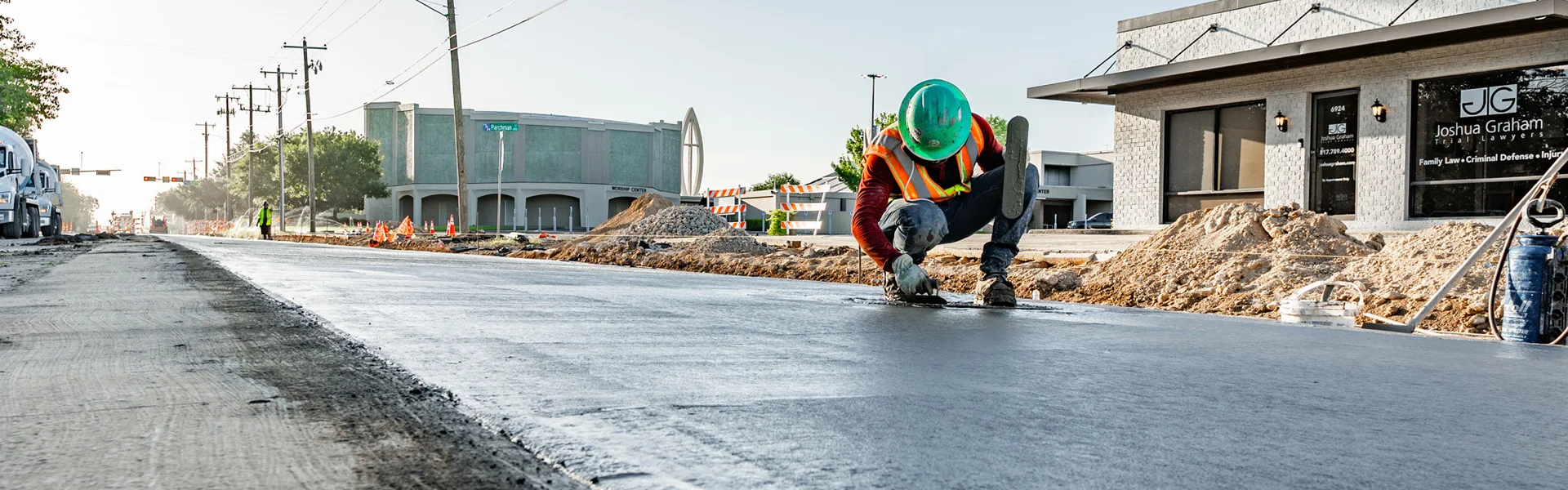
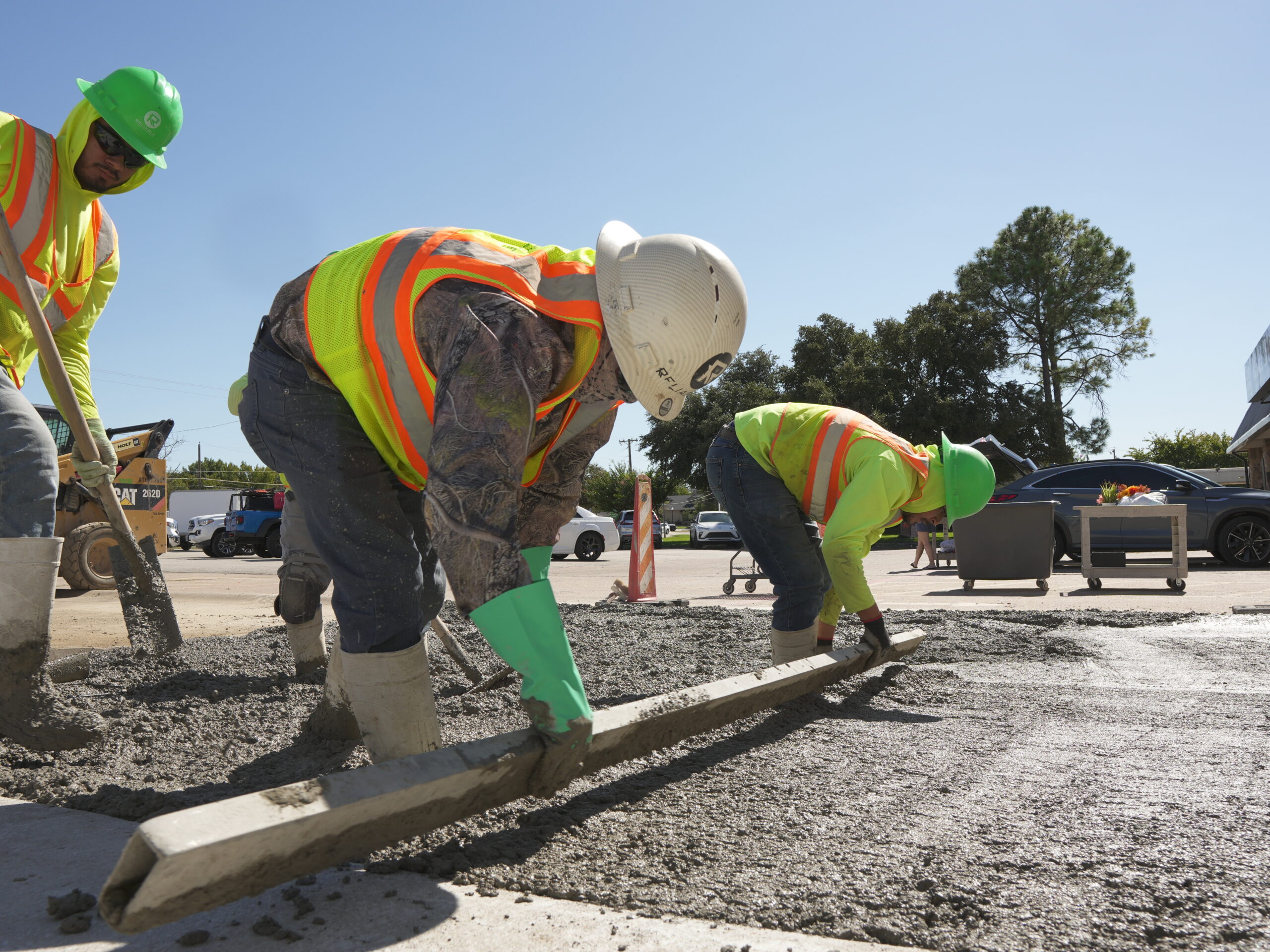
Recently, our crews finished a full concrete parking lot pour for a North Texas retail center, hand-finishing the surface panel by panel to make sure the slope drained correctly toward the site’s storm inlets, a detail that’s easy to get wrong and expensive to fix later. That kind of on-site attention to drainage and base prep is the difference between a lot that lasts three decades and one that needs major repair in eight years, regardless of which material you choose.
Every project we take on is fully insured and guaranteed, and we’ll give you a straight answer on asphalt vs. concrete for your specific property rather than steering you toward whichever is more profitable for us. You can see examples of both surface types in our completed project gallery.
Frequently Asked Questions
Is asphalt or concrete cheaper for a parking lot?
Asphalt has a lower upfront installation cost. Concrete costs more initially but typically needs less frequent major maintenance over its lifespan, so the total cost of ownership can be closer than the sticker price suggests, especially for high-traffic areas.
How long does each surface actually last in Texas?
With routine sealcoating and crack sealing, asphalt commonly lasts 15–20 years. Properly installed and jointed concrete can last 25–30 years or more, particularly in areas that see heavy or concentrated loads.
Can I mix asphalt and concrete on the same property?
Yes, and we recommend it often. Concrete at loading docks, dumpster pads, and turning areas, with asphalt across standard parking rows, is a common and cost-effective approach.
How often does asphalt need sealcoating?
Most Texas commercial lots need sealcoating every 2–3 years, depending on traffic volume and sun exposure. Waiting too long between applications shortens the pavement’s overall lifespan.
Will my new lot meet ADA requirements automatically?
Not automatically: accessible spaces, aisles, and routes have specific slope and surface requirements that need to be designed in before paving, not corrected after. We check this as part of every commercial installation.
Get a Straight Answer for Your Property
Every lot has different traffic, soil, and budget considerations, and the right surface isn’t always the obvious one. Contact Reliable Paving for a free on-site assessment and a straightforward asphalt vs. concrete recommendation for your property, backed by nearly 40 years of paving experience across North Central Texas. You can also browse our full range of paving, repair, and maintenance services to see everything we handle beyond new installation.